↑

Corporate Governance Structure

×

Board Members

Susan YangDirector

Date of Appointment
2023.06.09
Major Education and Experience
  • Department of International Trade, Tunghai University
  • EMBA, Tunghai University
  • Manager of Management Department, GOODWAY Machine Corp.
  • Deputy General Manager of Administration, Head Office, GOODWAY Machine Corp.
Current Concurrent Positions in the Company
  • Chairman and General
Current Concurrent Positions in Other Companies
None

Board Diversity

Board Members’ Professionalism and Independence

The company’s “Corporate Governance Practices Code” and “Rules for the Election of Directors and Supervisors” both establish the following diversity policy:
Board members should include, but are not limited to, the following two key criteria:

  • Basic Conditions and Values: gender, age, nationality, and culture, with the proportion of female directors recommended to reach one-third of the board seats.
  • Professional Knowledge and Skills: professional background (such as legal, accounting, industry, finance, marketing, or technology), expertise, and industry experience.

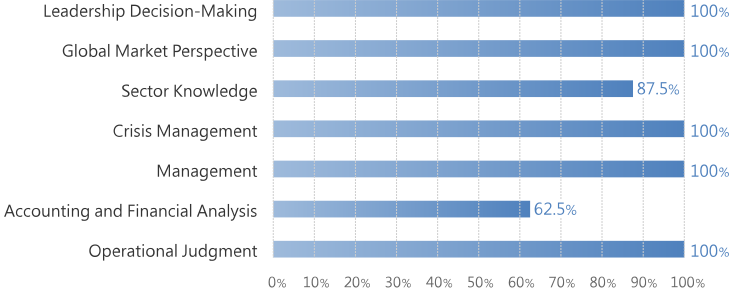
Board members should generally possess the necessary knowledge, skills, and qualities to perform their duties. To achieve the ideal goals of corporate governance, the board as a whole should have the following capabilities:

  • Operational Judgment
  • Accounting and Financial Analysis
  • Management Capability
  • Crisis Management
  • Sector Knowledge
  • Global Market Perspective
  • Leadership
  • Decision-Making Ability

Board Diversity

To strengthen corporate governance and promote a healthy development of the board’s composition and structure, the company’s board has approved the Corporate Governance Practices Code. Chapter 3, which focuses on enhancing board functions, includes a diversity policy. The composition of the board should include, but is not limited to, standards in two key areas: basic conditions and values, and professional knowledge and skills. Board members should generally possess the necessary knowledge, skills, and qualities to perform their duties. The specific management objectives are as follows:

  • The company’s board emphasizes gender equality, with at least one female director included among its members.
  • The company’s board focuses on management, industry knowledge, and global market perspective, with at least two-thirds of board members possessing competencies in these core areas.
  • Independent directors may not serve more than three consecutive terms in order to maintain their independence.
  • The number of board members who are also employees of the company, its parent, subsidiaries, or affiliates should not exceed one-third of the total board seats to ensure effective oversight.

Status of Achievement

The current board of directors consists of 8 members, including 3 directors with employee status, accounting for 38%, 4 independent directors representing 50%, and 1 female directors representing 13%. All members possess extensive experience and expertise in areas such as leadership, finance and accounting, management, and industry knowledge. The distribution of professional competencies is as follows:

Diversity Programs Gender Operational Judgment Accounting and Financial Analysis Management Crisis Management Sector Knowledge Global Market Perspective Leadership Decision-Making
Susan Yang Female V V V V V V V
Michael Yang Male V V V V V V V
Joe Chen Male V V V V V V
Caimin Yang Male V V V V V V
Chengta Tsai Male V V V V V V V
Kejing Chen Male V V V V V V
Minghsing Yeh Male V V V V V V V
Sheanjuinn Chiou Male V V V V V V
×

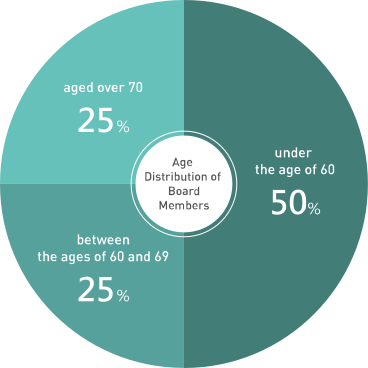
Age Distribution of Board Members

Directors with employee status account for 37.5% of the Company’s board. Among the independent directors, Mr. Chengta Tsai and Mr. Kejing Chen have each served approximately 6 years, while the remaining independent directors began their terms in June 2023. With respect to age distribution, 2 directors are over 70 years old, 2 are between 60 and 69 years old, and 4 are under 60 years old.

×

Board Performance Evaluation

Content Download
2025 Board Performance Evaluation Results
2024 Board Performance Evaluation Results
2023 Board Performance Evaluation Results
2022 Board Performance Evaluation Results
2021 Board Performance Evaluation Results
2020 Board Performance Evaluation Results
2019 Board Performance Evaluation Results

Performance Evaluation of External Directors

Content Download
2023 Performance Evaluation of External Directors

Assessment of the Independence of the Certifying CPA

CPA Independence and Competency

The Company’s Audit Committee conducts an annual evaluation of the independence of the external auditors and reports the results to the Board of Directors. The most recent evaluation was approved by the Audit Committee on November 6, 2025, and subsequently approved by the Board of Directors on the same date.

The evaluation items and results are as follows:

Independence Assessment:

Independence Assessment Criteria Evaluation Results Compliance with Independence Requirements
1 There are no direct or significant indirect financial interests between the CPA and the company. Compliant Yes
2 Whether there are no inappropriate conflicts of interest between the CPA and the company. Compliant Yes
3 The CPA has no financial lending transactions with the company. Compliant Yes
4 The CPA has not received any commissions related to the company’s business. Compliant Yes
5 The CPA and all members of the audit team do not hold any shares in the company. Compliant Yes
6 The CPA does not concurrently serve as a regular employee of the company receiving a fixed salary. Compliant Yes
7 The CPA has no joint investments or profit-sharing arrangements with the company. Compliant Yes
8 The certifying CPA does not engage in any other business that could compromise their independence. Compliant Yes
9 The CPA shall not audit the financial statements of institutions served within the two years prior to their engagement. Compliant Yes
10 During the audit period, neither the certifying CPA nor their spouse or dependents hold positions as directors, supervisors, managers, or roles with direct and significant influence on the company’s audit work. Compliant Yes
11 Whether an independence declaration issued by the CPA is obtained annually. Compliant Yes
12 Whether there have been no disciplinary actions imposed by regulatory authorities or the CPA association, nor any sanctions under Article 37, Paragraph 3 of the Securities and Exchange Act. Compliant Yes
13 Whether the quality and timeliness of audit and tax services meet requirements. Compliant Yes
14 Whether the CPA maintains good communication with the company’s management and board of directors. Compliant Yes
15 Whether the CPA actively provides recommendations on the company’s systems and internal control audits and documents them accordingly. Compliant Yes
16 Whether the CPA proactively provides regular updates to the company on tax laws, securities regulations, and newly revised IFRS accounting standards. Compliant Yes
17 Whether the audit team members demonstrate stability. Compliant Yes

Professional Competency and Qualification Assessment:

  • The company has not appointed the same CPA for more than seven consecutive years.
  • Timely completion of the company’s financial statement audits for each period.
  • Provides the company with financial and tax consulting services on an as-needed basis.
  • The CPA and the accounting firm meet all relevant requirements for audit experience and training hours.
  • Issues Audit Quality Indicators (AQIs) and conducts evaluations in accordance with established standards.

Evaluation Results:
For the current year’s financial statements, the Company appointed CPA Kuei-Duan Chen and CPA Hsin-Yu Chung of Jian-Zhi United CPAs to serve as the signing auditors. Following an evaluation, both CPAs were determined to meet the required standards of independence and professional competence. Independence representations were also obtained from the CPAs, confirming their compliance with independence requirements. In addition, with reference to the Audit Quality Indicators (AQIs) provided by the accounting firm, the auditors were assessed as meeting the standards of professionalism and suitability. Accordingly, the reliability of the issued financial statements is not in question.

Succession Planning for Board Members and Key Management Personnel

Succession Planning for Board Members

In accordance with the “Corporate Governance Best Practice Principles”, the Company has established a comprehensive succession plan for Board members. Beginning in 2025, the Company has been progressively promoting generational transition in key Board positions and optimizing the Board’s professional composition to ensure a sustainable and forward-looking governance structure.

On July 8, 2025, the Company completed the re-election of its Chairperson. President Susan Yang was elected as the new Chairperson, while former Chairperson Edward Yang assumed the role of Chairman Emeritus. This transition marks the completion of the Company’s planned second-generation succession. In recent years, the second generation has accumulated comprehensive operational experience and developed the necessary leadership capabilities through long-term rotational assignments in key positions, including President, Administration, and International Sales, and is fully prepared to assume leadership responsibilities.

In addition, the Company completed the re-election of its Board of Directors on September 4, 2025. The newly elected directors include Michael Yang, Chairperson of AWEA; Joe Chen, Executive Vice President of Ching Tai; and Caimin Yang, Deputy Manager of the Purchasing Department. By appointing professionals with expertise in operations, R&D and manufacturing, and technical fields, the Company has strengthened the Board’s overall professional capabilities in industry practice, business management, and technological development, while further enhancing the diversity of its governance structure and the quality of its decision-making.

In accordance with the “Corporate Governance Best Practice Principles”, the Company has established a Board Diversity Policy covering gender, age, professional background, and areas of expertise, and has set the following management objectives:

  • At least one female director.
  • Directors with industry experience and an international market perspective should account for at least two-thirds of the Board seats.
  • The term of independent directors shall not exceed three consecutive terms.
  • Directors who are also employees of the parent, subsidiary, or affiliated companies shall not exceed one-third of the Board seats.

To ensure the continuous improvement of the Board’s functions, the Company conducts annual performance evaluations of the Board and individual directors in accordance with the “Board Performance Evaluation Measures.” The evaluation covers aspects such as decision-making quality, member composition, ongoing professional development, and governance functions. The results serve as an important reference for subsequent director selection, reappointment, and succession planning, ensuring that the composition and capabilities of the Board meet the Company’s long-term development needs.

Succession Planning for Key Management Personnel

Institutionalized Succession Development Mechanism

The Company has established an institutionalized management development framework as a key foundation for cultivating the succession pipeline. The framework includes:

  • Performance Evaluation System:

    The Company conducts annual performance evaluations for key management personnel to assess their professional competence, leadership qualities, and succession potential, serving as the primary basis for determining their suitability for succession.

  • Management Training and Development Program:

    Key management personnel participate in regular operational management meetings and, based on their roles, receive professional training in areas such as corporate governance, technological development, finance and accounting, and industry trends, in order to strengthen the core competencies required to perform their management duties.

This institutionalized framework provides a comprehensive development system, forming the foundation of the Company’s succession pipeline for key management personnel.


Practical Experience and Governance Capability Enhancement

The Company helps high-potential mid- to senior-level managers accumulate critical management skills through cross-departmental collaboration and project-based assignments.

  • Participation in cross-departmental projects and operational issue collaborations to strengthen organizational coordination, problem-solving, and cross-unit integration capabilities.
  • Engagement in strategic initiatives to gain familiarity with the Company’s overall operations, enhancing decision-support capabilities and governance perspective.

Through diverse practical experiences, the Company’s management gradually develops comprehensive operational and governance capabilities, enhancing succession readiness and ensuring continuity and stability within the management team.